
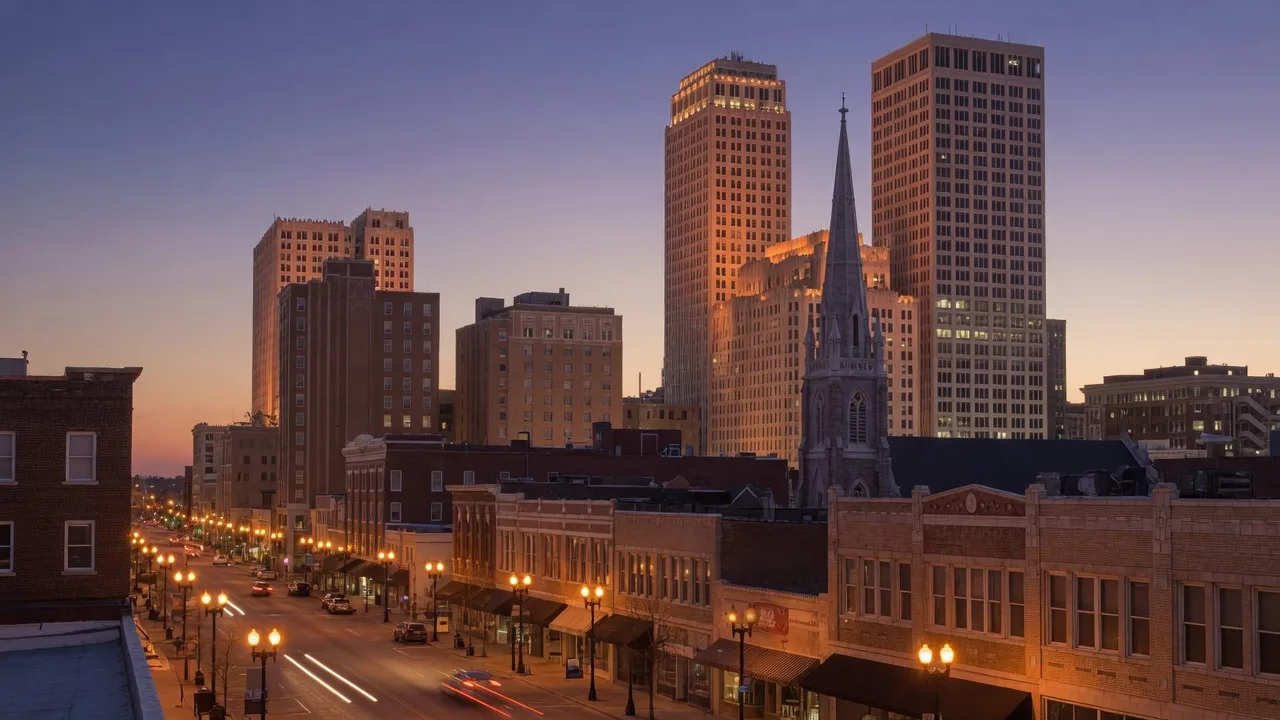
Downtown Tulsa is one of the metro’s most underrated places to live, and it is changing fast. Roughly 5,000 people call the Inner Dispersal Loop home, and this fall the city core welcomed its first full-service grocery store in more than a decade at the same time new condos, lofts, and apartments keep opening across its historic districts. If you are used to downtown living in other metros, Tulsa’s version will surprise you: it is walkable, loaded with character, and genuinely affordable compared to its peers. Here is what it is really like to make downtown Tulsa home.
Living inside the Inner Dispersal Loop, with plans to roughly double in the years ahead
The highway ring around Tulsa’s city center, with quick access to every part of the metro
With bikeability in the same range, one of the most walkable pockets of Tulsa
Historic buildings converted to lofts plus new luxury condos; no single-family homes here
What Makes Downtown Tulsa Special
Tulsa’s city center grew up during the 1920s oil boom, and that era left downtown a gift: one of the finest collections of Art Deco architecture in the country. Those terra-cotta towers, sculpted doorways, and stepped rooflines now wrap around a living, breathing core of lofts, restaurants, parks, and venues. Downtown is also home to the Greenwood District, where Tulsa’s historic Black Wall Street business community flourished, a story the city honors and tells to this day through museums and memorials.
What most newcomers notice first is the scale. Everything downtown sits inside the IDL, the highway loop that rings the core, which keeps the whole area compact and approachable. You can live in a loft in the Arts District, walk to dinner in the Blue Dome District, catch a show at the BOK Center, and be home before the streetlights finish warming up. It is city life without the chaos, and it is why downtown is drawing more relocating professionals and empty-nesters every year.
The Five Micro-Districts of Downtown
Downtown Tulsa is really five neighborhoods in one. Which one you land in shapes your whole experience, so here is the quick tour I give every client:
Tulsa Arts District (formerly the Brady District)
The cultural and creative heart of downtown, and the neighborhood I tell newcomers to start with. Guthrie Green anchors the district with a shaded central lawn and a stage, and the streets around it hold Cain’s Ballroom, the Tulsa Theater, galleries, breweries, and block after block of converted lofts.
Blue Dome District
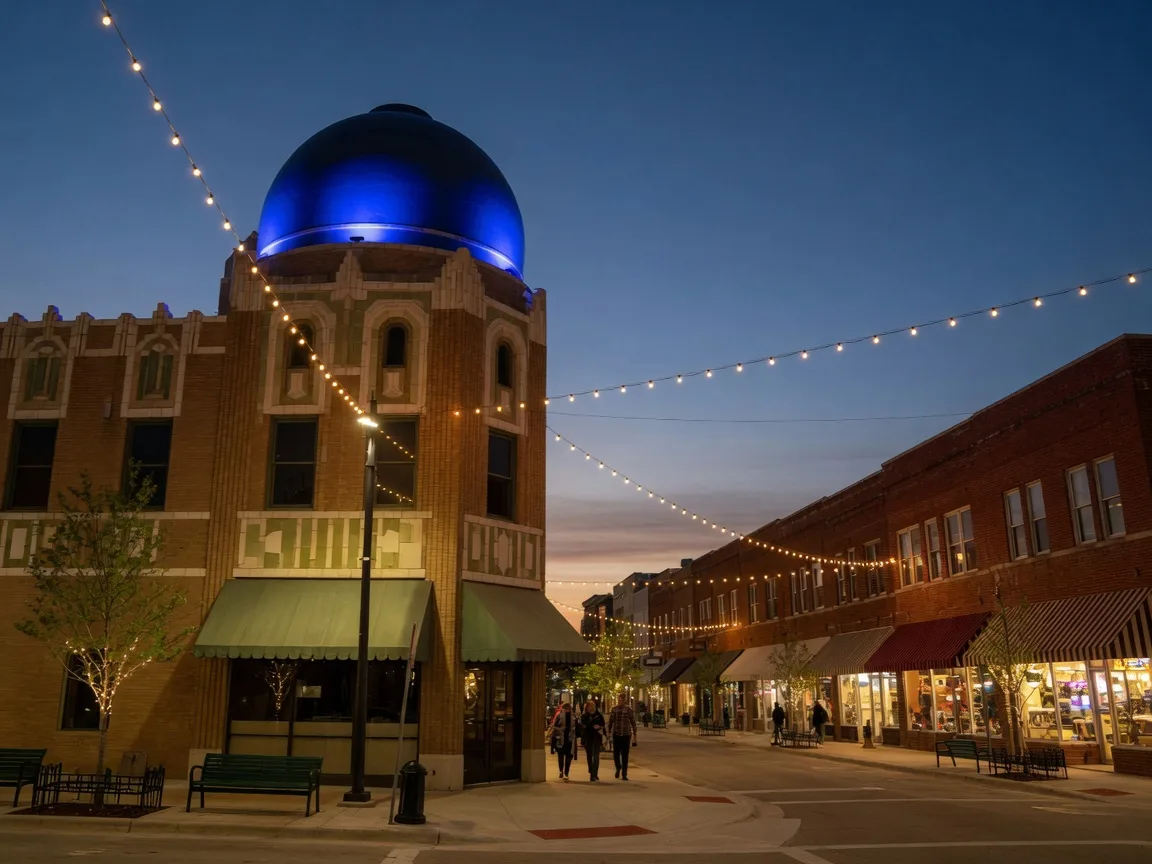
Downtown’s nightlife hub, named for the 1924 building with its glowing blue dome at 2nd and Elgin. The dome started life as a Route 66-era Gulf station, said to be Tulsa’s first 24-hour service station, and the district around it is now packed with bars, restaurants, and patios that fill up on game and concert nights.
Greenwood District
The historic district north of downtown that was home to Tulsa’s early 20th century Black Wall Street business community. Today Greenwood is a meaningful mix of memorials, museums, new businesses, and residences, and it is an essential part of any real downtown story. I always encourage buyers to spend an afternoon here understanding the community’s past and its revival.
Deco District
The slice of downtown with the densest concentration of Art Deco architecture from Tulsa’s 1920s oil boom. Walking Boston Avenue in the Deco District is like touring a museum of terra-cotta towers, ornamental stonework, and stepped rooflines, all free and all within a few blocks of the condos and restaurants.
East Village
Downtown’s emerging eastern edge, where new lofts and mixed-use buildings have risen alongside longtime favorites like the East Village Bohemian district. It is home to the Bazaar micro-market and some of the newest condo inventory in the city core, making it a great place to look if you want modern finishes with downtown energy.
A Day in the Life: Groceries and Green Space
The question I hear most from buyers considering downtown is where they would shop for groceries, and for years the honest answer was “a short drive.” That changed in September 2026, when Oasis Fresh Market opened as a full-service grocery store in the Historic ARCO Building at 6th and Cincinnati, giving the city core its first real grocery option in more than a decade. It was a genuinely big deal for downtown living, and it makes the case for city living that much easier for clients to picture.
For bigger stock-up trips, longtime options remain close by: Reasor’s at 15th and Lewis, Trader Joe’s, and Whole Foods are all a quick hop from the IDL, and smaller places like Connor’s Corner Store and the Bazaar micro-market in the East Village cover everyday needs. For outdoor time, Guthrie Green in the Arts District is downtown’s backyard, a 2.6-acre park that opened in 2012 with a lawn, a splash pad, a covered pavilion, and a full calendar of free concerts, movies, and fitness classes all summer. When you want bigger green space, The Gathering Place and Woodward Park are an easy drive from anywhere downtown.
Where to Eat and Drink Downtown
Downtown dining runs the full range, from white-tablecloth steakhouses to late-night pizza by the slice, and most of it is within walking distance of the residential core. A few of the spots I send buyers and out-of-town visitors to first:
PRHYME Downtown Steakhouse
A polished downtown steakhouse in the heart of the Arts District, the kind of place where a big deal or an anniversary dinner feels right at home.
Ti Amo Ristorante Italiano Downtown
Downtown’s outpost of a Tulsa Italian favorite, serving classic pastas and entrees steps from the BOK Center on Cheyenne Avenue.
The Tavern
A Blue Dome mainstay known for big sandwiches, burgers, and beer, with a lively patio that is central to downtown nightlife.
El Guapo's Cantina
A Blue Dome favorite for margaritas and Tex-Mex with a kitschy, colorful interior that is half the fun.
Bourbon St. Cafe
New Orleans energy in the Blue Dome District, from po’ boys and gumbo to live music on the patio.
Empire Slice House
Some of downtown’s best pizza by the slice, with creative toppings and a late-night cult following near the Arts District.
Arena Pub & Grill
An easy, casual spot on Denver Avenue for pre-game food and drinks when you are headed to the BOK Center or ONEOK Field.
Coffee culture is strong here too. Topeca, Chimera, Coracle, and Sona all roast or pour some of the best cups in the metro within the IDL, and each has its own personality: Topeca for a roaster’s precision, Chimera for community, Coracle for a quiet corner, and Sona for an East Village pit stop. I have closed plenty of afternoons working from downtown coffee shops, and they are exactly the kind of place you will meet your neighbors.
Topeca Coffee
A Tulsa-born roaster with a downtown cafe, perfect for a morning coffee before a walk through the Deco District.
Chimera Cafe
A cafe that is also a community hub near the Arts District, with coffee, craft drinks, and regular events.
Coracle Coffee
A modern specialty shop in downtown’s western edge, great for meeting clients or settling in with a book.
Sona Coffee
A cheerful spot in the East Village for espresso and pastries while you tour the newest lofts.
Culture, Sports, and Events Right Outside Your Door
One of the best arguments for downtown living is what you can do without getting in the car. The BOK Center hosts concerts, hockey, and big touring events, and ONEOK Field a few blocks away is home to the Tulsa Drillers for baseball all summer. Cain’s Ballroom, the historic dance hall on Main Street, and the Tulsa Theater in the Arts District keep live music on the calendar year-round, and the Tulsa Performing Arts Center rounds out theater, ballet, and symphony dates.
Culture lovers get the Bob Dylan Center and the Woody Guthrie Center, both in the Arts District, plus galleries scattered through the converted warehouses and storefronts. In warmer months, Guthrie Green’s free programming becomes downtown’s living room, and on event nights the whole core fills with people walking from dinner to a show. Downtown residents do not attend events; they live above them.
What Housing Looks Like Inside the IDL
Downtown Tulsa is an owner and renter market of condos, lofts, and apartments, with no single-family homes inside the loop. The inventory breaks down into a few distinct buckets:
Converted lofts in historic buildings
Many of downtown’s office and warehouse buildings have been converted into lofts with exposed brick, tall windows, and original beams. Think the Arts District and East Village for the classic loft feel.
New luxury condos
Davenport Urban Lofts opened in 2023 as downtown’s first true luxury condo development, with two- and three-bedroom units typically starting around $750,000 and a rooftop deck of roughly 7,000 square feet.
Apartments and rentals
For renters, downtown condo rentals generally run from the high $2,000s to more than $7,000 a month depending on size and building, with older apartments at a wider range of price points.
Small, steady inventory
Only about 5,000 people live inside the IDL, so the for-sale inventory stays genuinely small. Condos and lofts that are priced well tend to get attention quickly, which is exactly why working with an agent who watches downtown listings daily matters.
Because the for-sale pool is small, I stay on top of downtown listings for clients the way I track the suburbs. If you are considering a condo purchase, you will also want to look closely at HOA dues, rental restrictions, and the building’s financial health before you write an offer, and I help buyers work through all of it. Whether you are buying a second home, downsizing from a house in the suburbs, or relocating from another city’s downtown, the right unit at the right price does not last long.
Getting Around Town
The IDL is the secret to downtown’s convenience. The loop connects directly to the metro’s expressways, so a commute to an office in midtown, a school run to Jenks or Bixby, or a flight out of Tulsa International is a straightforward drive, and the farthest suburbs are comfortably within reach for a weekend outing. Inside the loop, walking does the heavy lifting, with bike lanes and trails filling the gaps, and public garages plus metered street parking cover the times you do drive in.
Pro Tip
Before you buy, spend one downtown evening like a resident: park near Guthrie Green, walk through the Arts District to Main Street, grab dinner in the Blue Dome District, and end at a show or a Drillers game. Then come back on a weekday morning and walk the route you would actually live on, from your condo door to the coffee shop, the grocery store, and the gym. That one-day test tells you more than any listing video, and it is the exact walkthrough I do with relocation clients who are new to downtown.
Who Downtown Is For
In my experience, downtown Tulsa suits a specific set of buyers beautifully: young professionals who want to live where they work and play, empty-nesters ready to trade yard work for walkability, physicians and executives relocating to the metro who care about lock-and-leave convenience, and buyers from bigger cities who want an urban life without the price tag. If you want a fenced yard, a school bus stop on your street, and space for a workshop, the suburbs are a better fit, and I will tell you that honestly. For everyone else, downtown is a front-row seat to everything Tulsa does well, and you can see the whole metro from here when you are ready for a change of pace. Curious how downtown compares to the rest of the metro? My Tulsa Metro community guide walks through every area side by side.
Frequently Asked Questions
Is downtown Tulsa a good place to live?
For the right buyer, yes. About 5,000 people live inside the Inner Dispersal Loop, and downtown is one of the most walkable parts of Tulsa, with a Walk Score around 70 out of 100. It is especially well suited to young professionals, empty-nesters, and relocating executives and physicians who want urban energy without big-city prices.
Are there single-family houses for sale in downtown Tulsa?
No. Housing inside the IDL is almost entirely condos, lofts, and apartments in converted historic buildings and newer developments. Buyers who want a house with a yard typically look at neighborhoods a short drive from the core, which is a common pattern when I work with clients who split time between downtown work and suburban weekends.
How walkable is downtown Tulsa?
Downtown is one of the most walkable parts of the Tulsa Metro, with a Walk Score around 70 out of 100 and bikeability in a similar range. The Arts District, Blue Dome, and Deco District are all connected enough that you can easily walk from Guthrie Green to a game or show in under 15 minutes, though a car is still handy for groceries and errands beyond the core.
Where do downtown Tulsa residents buy groceries?
Downtown got its first full-service grocery store in more than a decade when Oasis Fresh Market opened in the Historic ARCO Building at 6th and Cincinnati in September 2026. Before that, residents relied on stores like Reasor’s at 15th and Lewis, Trader Joe’s, and Whole Foods in nearby midtown, plus small markets like Connor’s Corner Store and the Bazaar in the East Village.
What is there to do in downtown Tulsa?
A lot, and most of it is walkable. The BOK Center hosts concerts and sports, ONEOK Field is home to the Tulsa Drillers, Cain’s Ballroom and the Tulsa Theater book live music, and the Tulsa Performing Arts Center rounds out the stage calendar. Guthrie Green offers free concerts, fitness classes, and family events, and the Bob Dylan Center and Woody Guthrie Center tell the story of Tulsa’s music history.
Written by Jessica Ford, Realtor® | Chinowth and Cohen Realtors