
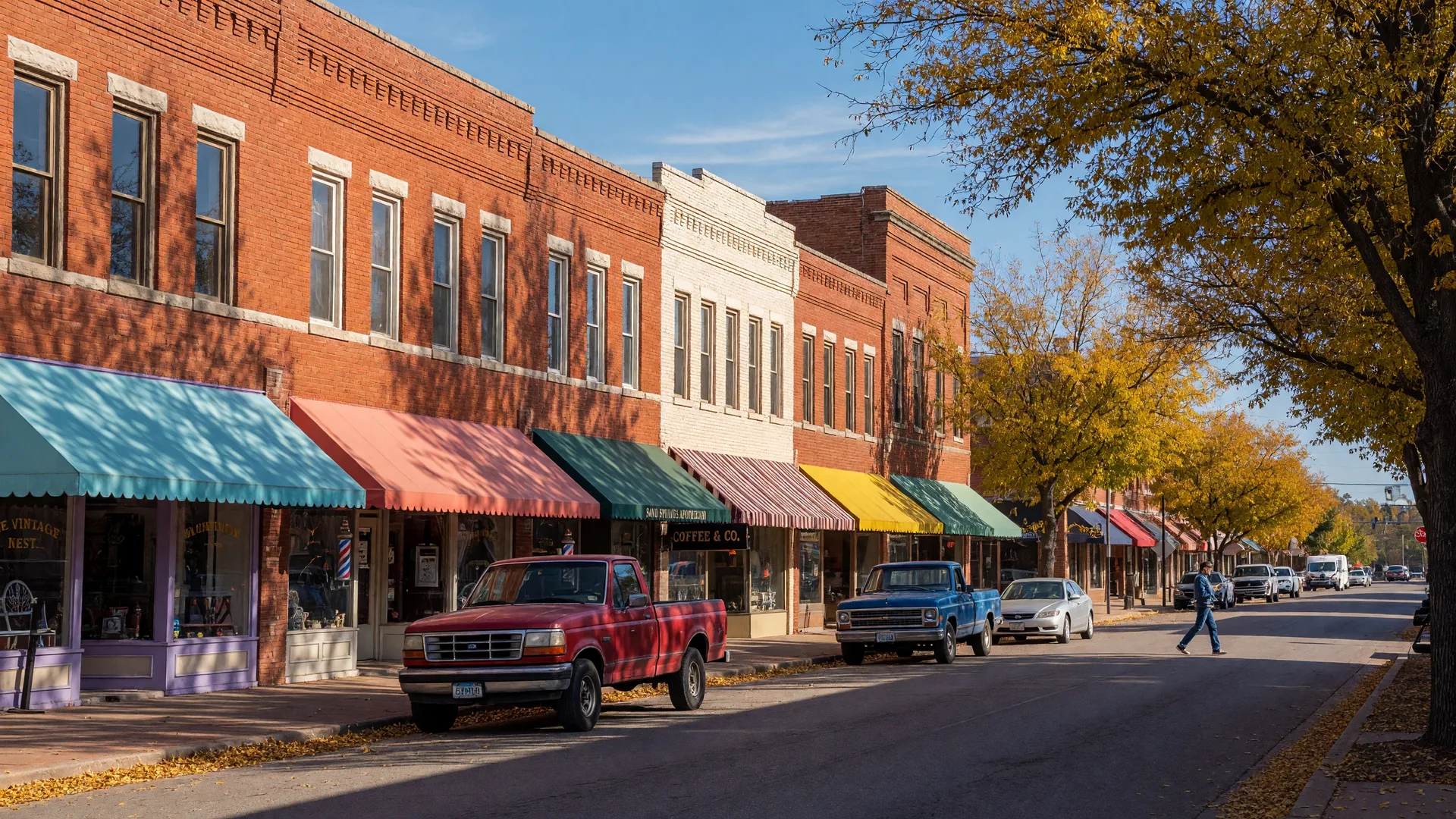
When relocating families ask me about the Tulsa Metro, Sand Springs is the suburb I love to put on their radar. It sits just west of downtown Tulsa, close enough that the commute is genuinely short, yet it has a character all its own: an old-growth forest with trees older than the state, a lake for weekend fishing, a downtown that has come back to life, and a community that still feels like a community. Over my years helping families settle across the metro, I have learned that Sand Springs offers one of the best combinations of value, outdoor living, and convenience in the entire Tulsa area.
Below is my guide to what living in Sand Springs is actually like, from the schools and parks to the commute and the local spots worth knowing. Whether you are raising kids, starting a new job in Tulsa, or looking for a quieter place to put down roots, here is what makes this western suburb worth a serious look.
A Town Built With Purpose
Sand Springs was founded in 1911 by philanthropist Charles Page as Oklahoma's only planned industrial town, and that sense of intention still shapes the community today. Page built an interurban railway linking Sand Springs to Tulsa, laid out housing and parks for his workers, and created a city with a clear identity from day one. More than a century later, that foundation shows up in the town's tree-lined streets, its preserved landmarks, and a community that genuinely looks out for its neighbors.
Sand Springs Public Schools
The Sandites, as the district's teams are known, serve roughly 5,100 students across eight schools, and the system is a big reason families land here. Charles Page High School ranks among the top 100 high schools in Oklahoma on U.S. News & World Report's list, with Advanced Placement coursework and strong athletics programs that give kids plenty of ways to get involved. For families comparing Tulsa suburbs, Sand Springs offers solid schools with a smaller-district feel.
Keystone Ancient Forest
This is the outdoor gem that surprises everyone. The Keystone Ancient Forest is a 1,360-acre preserve of old-growth cross timbers, home to cedars and post oaks estimated at 300 to 500 years old. More than 12 miles of trails wind through the forest, including the paved, ADA-accessible Childers Trail, which makes the ancient oaks reachable for strollers, wheelchairs, and everyone in between. It is one of the most special natural places in the entire Tulsa Metro, and it sits right in Sand Springs' backyard.
Keystone State Park and Keystone Lake
Just west of town, Keystone State Park and Keystone Lake deliver the classic Oklahoma lake experience: boating, fishing, camping, and long afternoons on the water. Whether you want a quick evening fishing trip after work or a full weekend under the trees, the lake is close enough to feel like an everyday amenity rather than a vacation you have to plan around.
Case Community Park and Recreation
Case Community Park is the city's recreational hub, with sports fields, playgrounds, picnic areas, and a community center that hosts leagues, classes, and events year-round. It is the kind of park where weekend mornings are full of youth soccer games and families walking the trails, and it anchors a parks system that keeps outdoor life easy for every age.
The Canyons at Blackjack Ridge
Golfers take note: The Canyons at Blackjack Ridge is one of the most highly rated public courses in the region. The course plays through rolling, wooded terrain that feels a world away from the city, and it is a big reason Sand Springs draws residents who want an active lifestyle without giving up proximity to Tulsa. Tee times here are a favorite local pastime.
Downtown Sand Springs: The Triangle and Old Town
Sand Springs' downtown has been through a genuine revival. The Triangle district is the revitalized heart of town, lined with locally owned shops, restaurants, and a calendar full of community events, while the Old Town antique district offers the kind of unhurried browsing that makes small-town Oklahoma charming. Add the Sand Springs Cultural & Historical Museum, housed in a former library, and you have a downtown worth spending a Saturday in.
Location and Commute
Sand Springs sits about eight miles from downtown Tulsa, and the commute via the Sand Springs Expressway (U.S. 412) typically takes 10 to 15 minutes. That is one of the shortest suburban-to-city drives in the metro, and Tulsa Transit's Route 114 bus also connects the two cities for about two dollars a ride. Residents get the quiet, slower pace of a smaller community with downtown Tulsa's jobs, hospitals, and entertainment just minutes away.
Where to Eat and Drink in Sand Springs
A town is only as good as its gathering places, and Sand Springs has built a solid local lineup. These are the spots I point newcomers to first.
Boulder Coffee
118 N Main St, downtown Sand Springs
A downtown coffee shop in The Triangle where locals start their mornings. It is the kind of place that makes you want to linger, and it is a good sign for anyone weighing a move: a thriving downtown coffee shop usually means a neighborhood on the rise.
Old Town Cafe
207 N Lincoln Ave, Sand Springs
A classic hometown cafe serving breakfast and lunch in the Old Town district. The kind of spot where the staff knows regulars by name, which is exactly the community feel relocating families are looking for.
Livi Lee & Co. Coffee + Donuts
411 E Broadway St, Sand Springs
A local favorite for coffee and fresh donuts, with a second location in the Prattville area of Sand Springs. Perfect for the Saturday morning family donut run after a week of school and work.
Crescent Cafe
3417 S 113th W Ave, Sand Springs
A cozy neighborhood cafe on the south side of town with a loyal local following. It rounds out a dining scene that also includes longtime favorites like Little Venice, the well-known local Italian restaurant that has been feeding Sand Springs families for generations.
Why Relocating Families Choose Sand Springs
In my work helping families relocate to the Tulsa Metro, I have noticed something about Sand Springs buyers: they tend to be looking for a specific balance. They want the jobs, hospitals, and entertainment of a major city, but they also want a yard, a lake, a trail through the woods, and neighbors who know their names. Sand Springs delivers that balance, and it does so at a price point that tends to run below the metro's most expensive suburbs.
Recent sold-price data puts the median home price in Sand Springs around $247,000, and the housing stock reflects the town's range: established neighborhoods with mature trees near the historic core, family homes around Case Community Park, and newer construction on the growing south side. Compared with similar communities in Dallas, Denver, or Phoenix, that combination of price, commute, and quality of life is hard to beat, which is why out-of-state buyers keep discovering it. For a wider view of how Sand Springs fits into the metro, see my Tulsa Metro community guide.
If you are thinking about relocating to the Tulsa Metro, I would love to help you find not just the right house, but the right community. We can talk about what matters to you, and I will point you toward the neighborhoods, schools, and yes, the coffee shops that fit. Finding your place here is one of the small joys of settling in, and I would be honored to help you get here.
FAQs About Living in Sand Springs
Is Sand Springs a good place to live?
Yes. Sand Springs is a family-friendly western suburb of Tulsa with a strong school system, an unusually rich outdoor scene anchored by the Keystone Ancient Forest and Keystone Lake, a revitalized downtown, and one of the shortest commutes to downtown Tulsa of any metro community.
How are Sand Springs Public Schools rated?
Sand Springs Public Schools serve about 5,100 students across eight schools, and Charles Page High School ranks among the top 100 high schools in Oklahoma on U.S. News & World Report, with Advanced Placement coursework and strong athletics. Families describe the district as having a smaller, more connected feel than the region's largest districts.
How long is the commute from Sand Springs to Tulsa?
Sand Springs is about eight miles from downtown Tulsa, and the drive via the Sand Springs Expressway (U.S. 412) typically takes 10 to 15 minutes. Tulsa Transit's Route 114 bus also connects the two cities for roughly two dollars a ride.
What is there to do outdoors in Sand Springs?
The Keystone Ancient Forest offers more than 12 miles of trails through 300 to 500-year-old cedars and post oaks, including the paved, accessible Childers Trail. Keystone State Park and Keystone Lake provide boating, fishing, and camping, and Case Community Park anchors the city's recreation scene. Golfers also rate The Canyons at Blackjack Ridge among the best public courses in the region.
What are home prices like in Sand Springs?
Home prices in Sand Springs tend to run below the metro's most expensive suburbs, which is part of the appeal. Recent sold-price data puts the median home price around $247,000, and buyers can find everything from established neighborhoods with mature trees to newer construction on the town's growing south side.
Why should relocating families consider Sand Springs?
Sand Springs combines a genuine sense of community, solid schools, remarkable access to nature, and a 10 to 15 minute commute to downtown Tulsa. For families who want the character and neighborly feel of a smaller Oklahoma town without giving up the jobs and amenities of the Tulsa Metro, it is one of the best values around.
Thinking about making Sand Springs your home? I can help you find the perfect property in this incredible community. Reach out anytime to start the conversation.
Written by Jessica Ford, Realtor® | Chinowth and Cohen Realtors